When a Buddhist loved one passes, the funeral extends far beyond a single farewell ceremony. The chanting at the wake, the prayers on the 7th day, the observances at the 49th day: each stage is an act of spiritual care for the person who has gone, not just a marking of loss. Customs vary across dialect groups and Buddhist schools of thought, but a common foundation runs through all of them: the beliefs of impermanence, merit-making, and the soul's journey toward rebirth. For families arranging Buddhist funeral services in Singapore for the first time, and for guests attending, knowing what lies behind the rituals makes each one more meaningful.
Buddhist Beliefs About Death and the Afterlife
Two beliefs shape Buddhist funeral traditions above all others. The first is impermanence. Buddhism teaches that death is not an ending but a transition, a passage from one state of existence to the next. Funeral rites honour this transition with dignity and spiritual attention rather than resisting what cannot be changed.
The second is rebirth through merit. The soul journeys toward a new life, and the quality of that rebirth is shaped by karma. The chanting, prayers, and offerings performed during and after the funeral accumulate merit on behalf of the deceased, supporting a more favourable passage forward. This is why the body is traditionally left undisturbed for three to four hours after death: the soul is believed to linger, and disturbing the body too soon is thought to cause distress during that early transition. It is one of the quieter, less visible customs of Buddhist funeral traditions, but it reflects the same care that runs through every stage that follows.
Before the Funeral: Preparing the Body and Setting Up the Wake
Once the waiting period has passed, the body is washed and dressed in simple, modest clothing. Family members may place prayer beads or other symbolic items in the deceased's hands, and monks or family members will begin reciting prayers at this point, both to guide the spirit and to bring calm to the household during those first difficult hours.
The wake follows, typically held at the family home, a void deck, or a funeral parlour. An altar is set up with a photograph of the deceased, an image of the Buddha, candles, incense, fresh flowers, and food offerings. Buddhist wakes in Singapore typically run for either three, five, or seven days, with odd numbers chosen deliberately, as they signify an incomplete cycle of life and acknowledge that the soul is still mid-journey. The extended duration gives family and friends time to gather and pay their respects, and allows the soul time to prepare for what comes next.
Buddhist Funeral Services in Singapore: Wake Rituals and Traditions
Chanting and Prayers by Monks
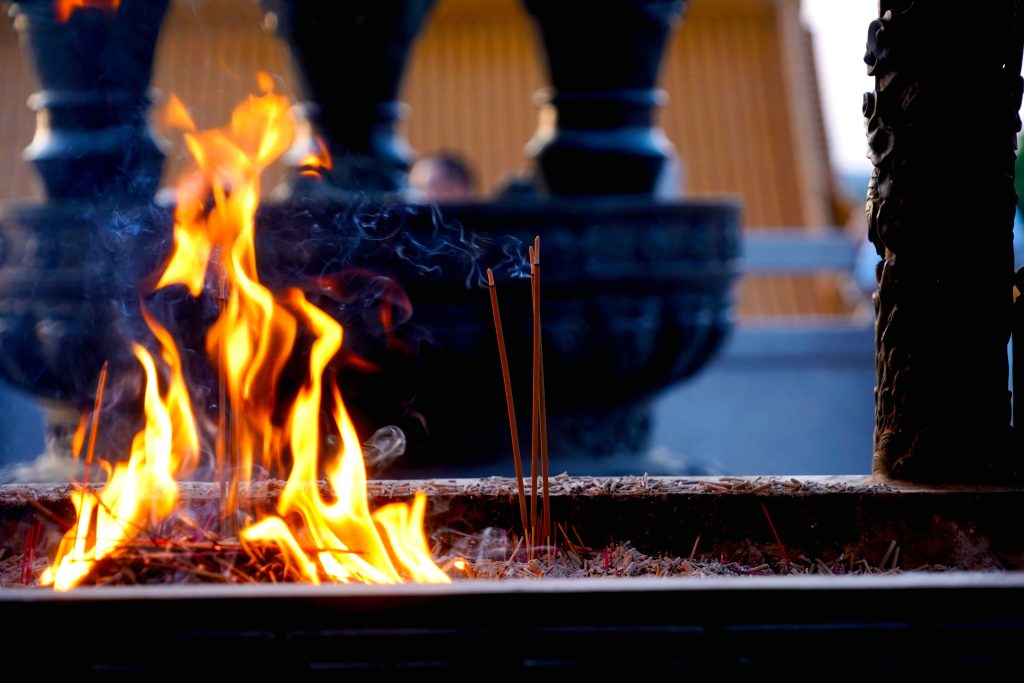
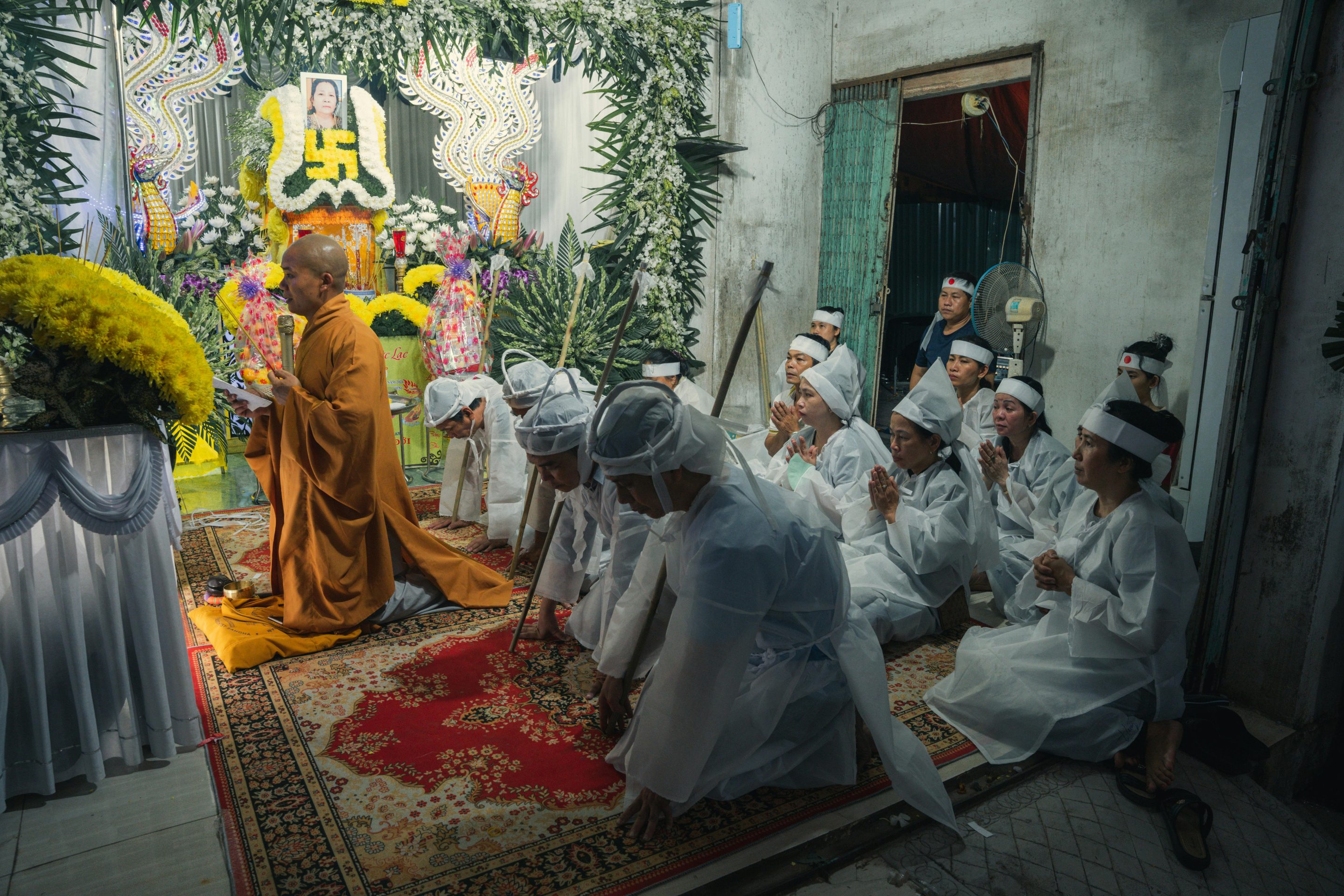
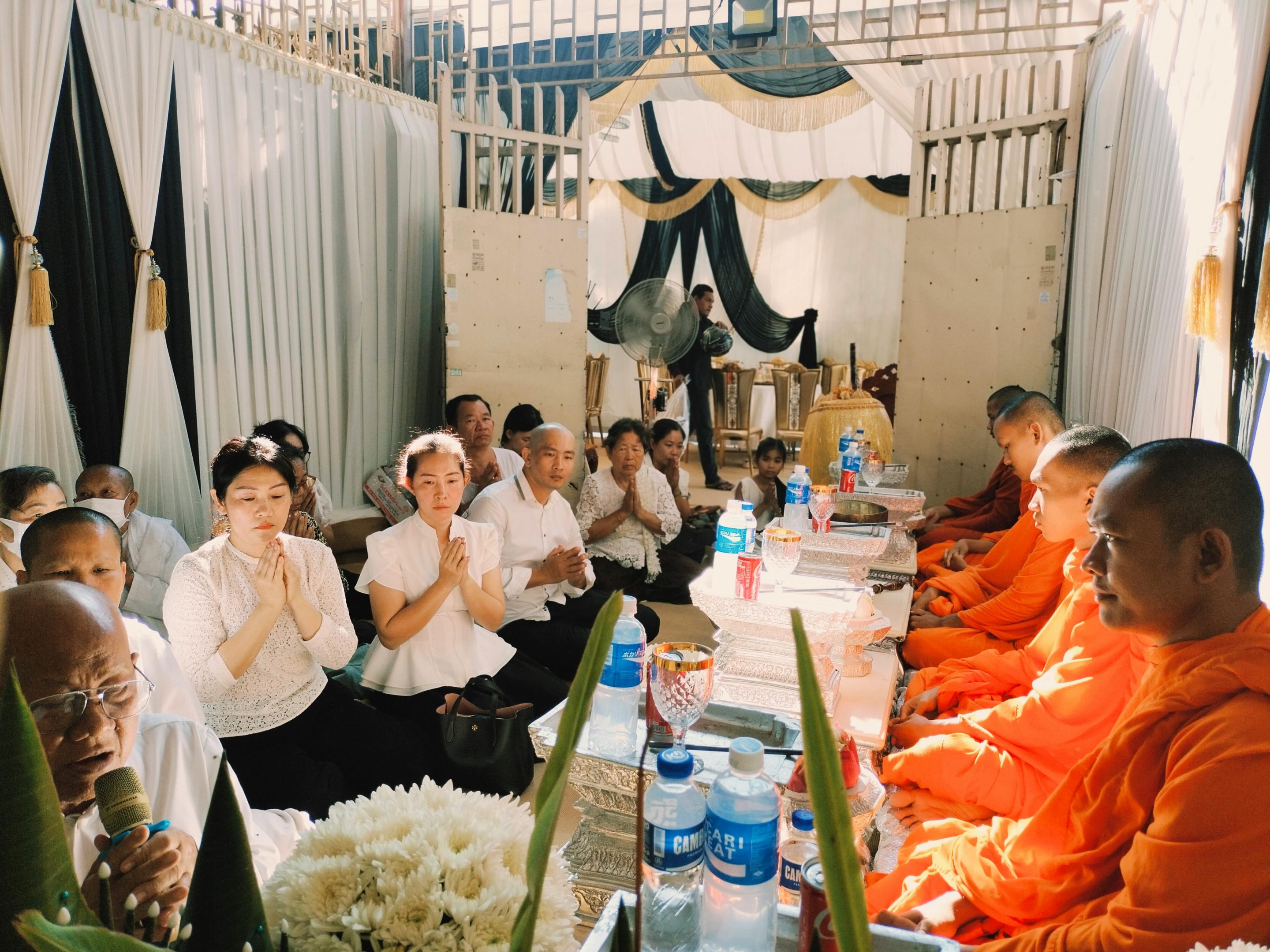
At the centre of the wake, on its final night, is the monk-led chanting session. Monks recite Buddhist scriptures and sutras to comfort the deceased's spirit and generate merit for the next life. The ceremony typically begins with a gong or bell, and incense burns throughout to purify the space. Monks may also offer brief teachings on impermanence, providing the bereaved family with a framework for their grief alongside the formal rites.
Cloth Offering and Joss Paper
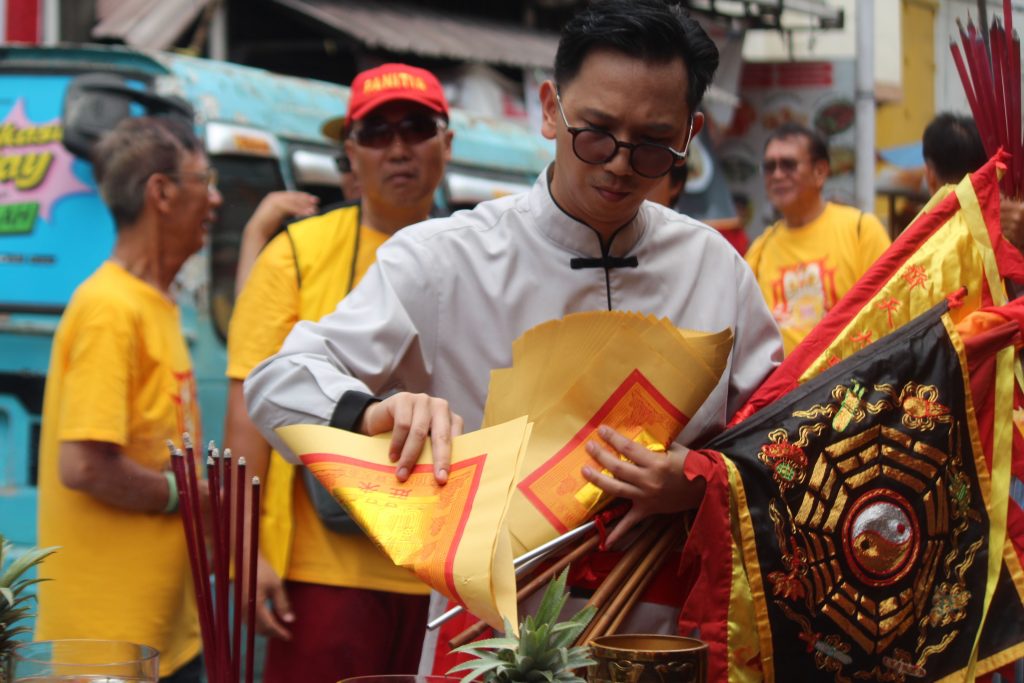
Following the chanting, family members present cloth to the monks as a gesture of gratitude for their spiritual guidance. Joss paper and symbolic items are sometimes burned as offerings for the deceased. It is worth knowing that this practice comes from Chinese cultural tradition rather than Buddhist doctrine, and some temples actively discourage it. Families can decide for themselves and observe what is right for their own tradition.
Open Casket Viewing
Many Buddhist funerals include an open casket viewing before the final procession. Family and friends gather at the altar for a final farewell, and the atmosphere tends to shift from the formal rhythms of the chanting ceremony to something quieter and more personal. Once the casket is closed, it is carried to the hearse in preparation for the procession.
The Funeral Procession
A ceremonial procession accompanies the casket from the wake venue to the crematorium. Some family members carry banners or a portrait of the deceased, while others walk with sticks as a gesture of solidarity and mutual support. The procession marks the close of the wake and the beginning of the final stage of the service.
Cremation in Buddhist Tradition
Cremation is the most common choice for Buddhist families in Singapore, and the reasons are both spiritual and practical. It reflects the Buddhist belief in impermanence: the physical body is released, allowing the soul to move forward unencumbered. It is also the pragmatic reality in a city where burial land is limited. Burial, however, remains an option for families whose tradition or personal preference requires it.
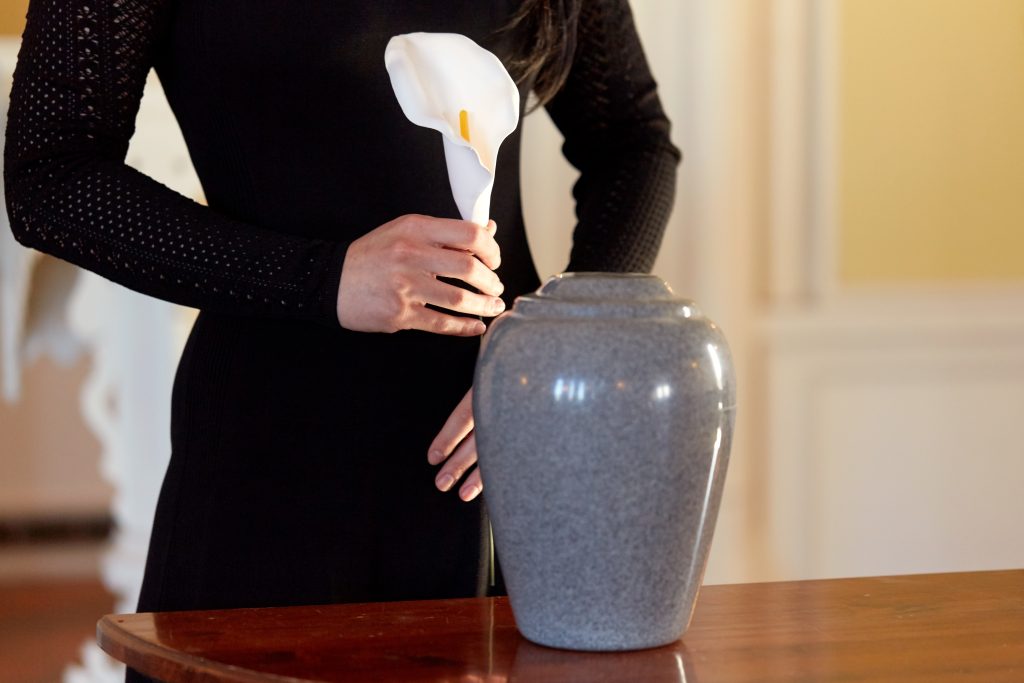
At the crematorium, a final service is held. Monks lead chanting, family members circle the casket in a last farewell, flowers are offered, and a short eulogy is delivered. For families who have chosen direct cremation services, meaning cremation without a formal wake, the arrangements proceed directly to the facility without the multi-day ceremony. All NEA bookings and documentation are handled by the funeral service provider on the family's behalf. Ashes are collected a few days after cremation and may be placed in a columbarium niche, kept at a home altar, or scattered at sea in accordance with NEA regulations.
Post-Funeral Observances: The 7th, 49th, and 100th Day
For Buddhist families, the mourning process continues well beyond the funeral itself. The 7th day after death marks the first post-funeral gathering, where prayers and offerings support the soul's early passage.
The 49th day is the most significant milestone. Buddhist belief holds that the soul remains in an intermediate state for up to 49 days, undergoing seven transitions of seven days each before rebirth. The ceremony on this day formally closes that transitional period, with prayers offered to support a favourable outcome. Many families also observe the 100th day as a final ceremonial close, gathering to pray together and honour the memory of the deceased.
Beyond these dates, many families continue to observe their loved one through offerings at home altars or temples, particularly during Qingming and the Hungry Ghost Festival. These are not obligations. They are expressions of ongoing love and remembrance.
Buddhist Funeral Etiquette: What to Wear and How to Pay Respects
Guests should wear simple, modest clothing in dark or muted tones: black, grey, or navy. Avoid bright colours and red entirely. White is reserved for immediate family members, and jewellery or other displays of wealth are considered inappropriate for the occasion.
At the altar, bow respectfully before the photograph of the deceased and offer incense if invited. When monks are chanting, remain silent. Non-Buddhists are welcome to observe without participating, and the officiant will offer cues on when to sit, stand, or move during the rituals. It is customary to present condolence money (Bai Jin) in an envelope upon arrival, with odd amounts preferred. Present the envelope directly to a family member rather than leaving it at the altar.
Honouring Your Loved One According to Buddhist Tradition
If you have recently lost someone and are navigating these arrangements for the first time, Singapore Funeral Enterprise is here to help you through each decision with patience and care. Our Buddhist funeral services cover the full range of traditions practised across Singapore's Chinese community, delivered by an in-house team of 18 trained professionals with decades of frontline experience in Buddhist funeral rites across dialect groups. We handle every aspect of the arrangements, from wake setup and monk coordination through to NEA documentation and urn placement, with transparent and affordable pricing itemised clearly upfront.
To discuss our Buddhist funeral packages, cremation packages, or any aspect of the arrangements, contact us for a free, no-obligation 45-minute face-to-face consultation. We are available by phone and WhatsApp at 8068 9898, 24 hours a day, 7 days a week. You can also leave your contact details via the form on our website, and we will arrange a callback at a time that suits you.