In the weeks following a funeral, many Chinese Buddhist and Taoist families in Singapore face a quieter, less-discussed set of decisions. The wake has passed. The cremation is done.
But the question of how to continue honouring the person who has gone often remains. For many families, setting up an ancestor tablet is part of that answer. These traditions are especially common after Buddhist funeral services in Singapore and Taoist funeral ceremonies, where ongoing ancestral remembrance remains an important part of mourning customs. Whether it is necessary, what it involves, and how to do it properly are questions worth taking seriously, and this piece covers all three.
What Is an Ancestor Tablet and What Is Its Purpose?
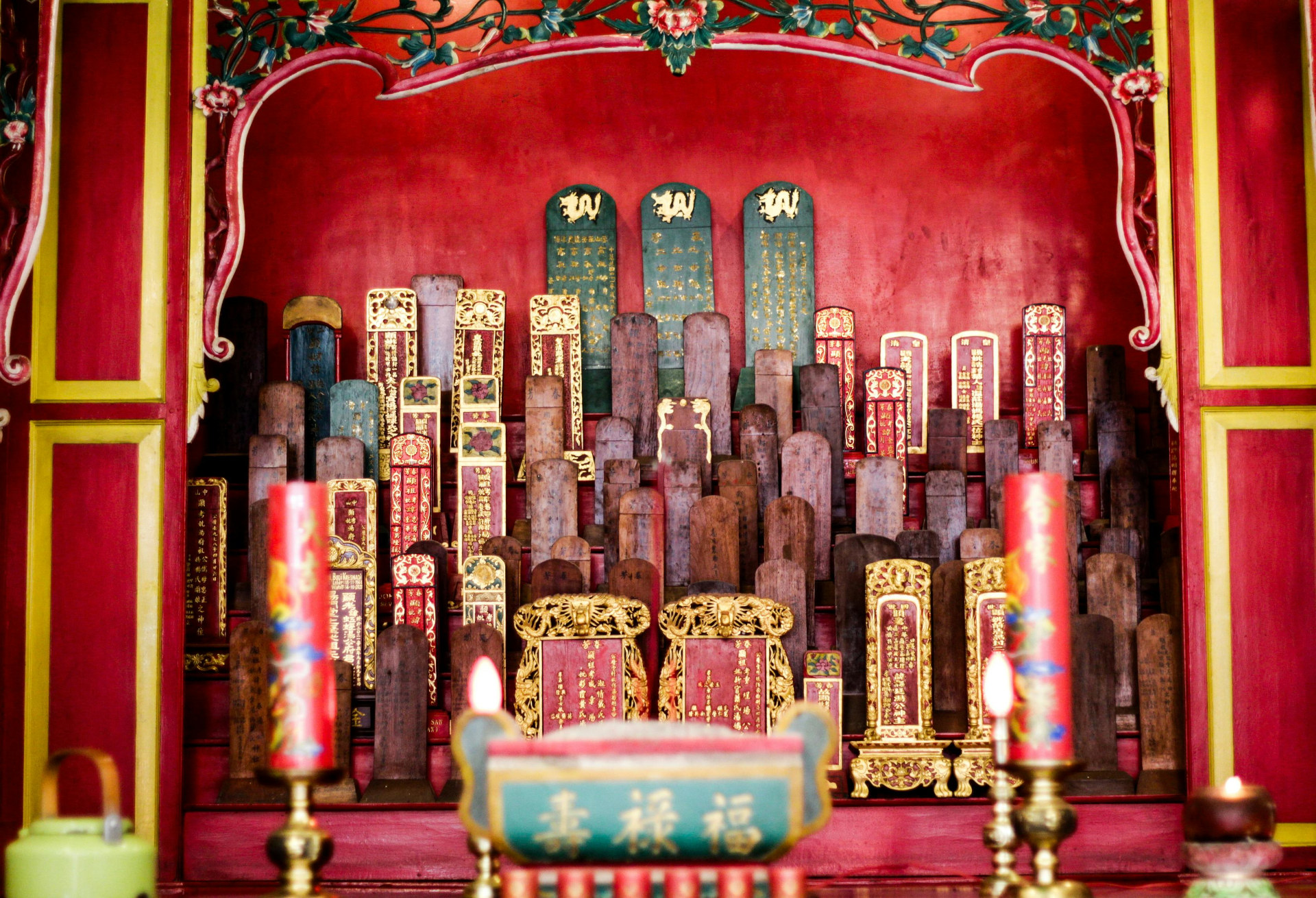
An ancestor tablet (also called a spirit tablet or memorial tablet) is a wooden plaque inscribed with the name, birth date, and death date of a deceased family member. Traditionally lacquered in red or black and written in classical Chinese characters, it serves as a spiritual dwelling place for the departed, a focal point at which family members can offer incense, prayers, and food to maintain their connection with the person who has passed.
The belief behind the tablet draws on a concept shared by both Buddhist and Taoist traditions: that a person carries three souls in life. When death occurs, these souls separate and travel different paths. The first, Ling Hun (灵魂), is the spiritual soul that enters the cycle of rebirth. The second, Sheng Hun (生魂), is associated with the physical remains and is said to reside in the columbarium niche. The third, Jue Hun (觉魂), is the memory soul, and it is this soul that is believed to dwell within the ancestral tablet. This is why the tablet is seen as more than a memorial object: for families who hold these beliefs, it is a genuine point of presence for the departed. Honouring it regularly is an expression of filial piety, the deep respect for parents and ancestors that sits at the heart of Chinese spiritual life.
The practice is most common among Hokkien, Teochew, and Cantonese families, though the specific customs and inscriptions vary across dialect groups.
Is an ancestral tablet necessary?
There is no single answer. While Taoism and Buddhism do not require a tablet as a strict obligation, many families find that having one gives them a dedicated space for ongoing remembrance. For families who have already arranged a columbarium niche, the tablet and the niche serve different purposes: the niche holds the ashes, while the tablet is the resting place for the memory soul at home. Some families maintain both; others choose one or neither. The decision comes down to personal belief, family tradition, and practical circumstances.
How to Write an Ancestor Tablet
Once a family decides to set up an ancestor tablet, the next question is what goes on it. The inscription follows a specific format that varies slightly across dialect groups and traditions, and getting it right is considered spiritually important. It forms the tablet's identity and, in the belief of those who observe these traditions, determines whose soul it will house.
The standard elements include the departed's full Chinese name, written vertically in traditional characters; a generational or honorary title such as Xian Kao (先考) for a late father or Xian Bi (先妣) for a late mother; the dates of birth and passing, recorded according to the lunar calendar in most traditional practice; and the family surname and lineage marker, affirming the tablet's place within the ancestral line.
This is not something families are expected to prepare themselves for. The inscription is traditionally written by a calligrapher, a Taoist priest, or a Buddhist monk, and the reason goes beyond convention. The characters must be formed correctly, and the format must follow the specific conventions of the family's dialect tradition. Families should seek guidance from their temple, their religious practitioner, or an experienced funeral service provider to ensure the inscription is accurate and properly prepared. Many families also consult providers offering Singapore funeral services that specialise in Buddhist and Taoist funeral customs to ensure the tablet inscription and consecration follow the correct traditions.
Once inscribed, the tablet undergoes a consecration ceremony known as Dian Zhu (点主), performed by a priest or monk. This ritual formally invites the soul to reside within the tablet. Without it, the tablet is considered an uninhabited object rather than a spiritual dwelling.
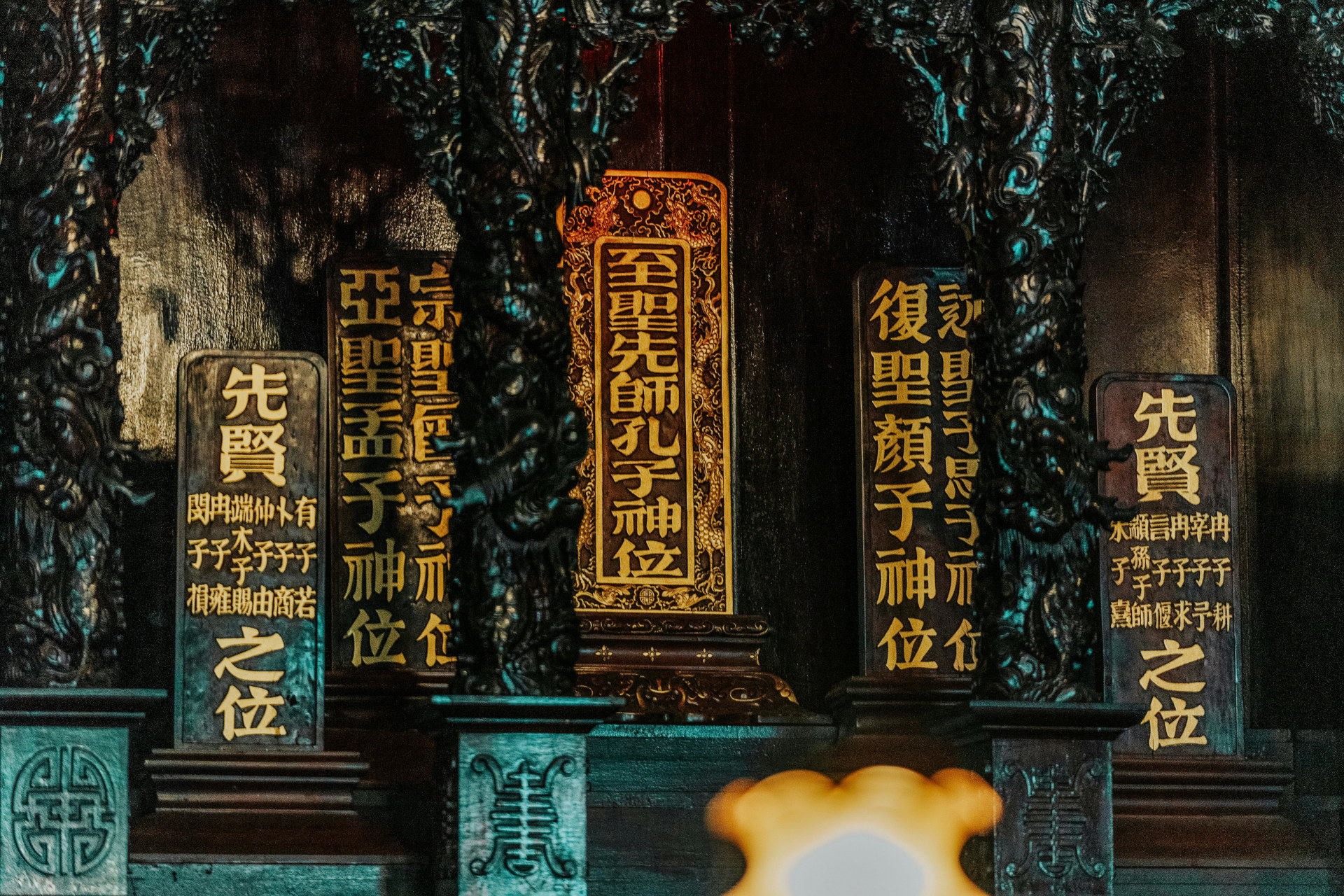
How to Set Up a Chinese Ancestor Altar at Home After Buddhist or Taoist Funeral in Singapore
With the tablet properly inscribed and consecrated, the next step is finding the right place for it at home. The altar should sit in a clean, quiet area, most commonly the living room or a dedicated prayer room, positioned against a solid wall and raised above shoulder level. Placement matters here: avoid setting the altar against a bathroom wall, directly under a beam or staircase, opposite a mirror, inside the kitchen, or beside a shoe cabinet. These positions are considered disrespectful and inauspicious.
The altar itself is traditionally made of wood, though a simple shelf, wall-mounted unit, or cabinet works well in a modern home. When facing the altar, deity figures are positioned on the left (the Dragon side), with the ancestral tablet on the right (the Tiger side). What surrounds the tablet is equally considered: an incense burner filled with ash or rice, three small cups of water, fresh fruit, flowers, and candles are the standard offerings. A photograph of the deceased is also commonly placed alongside the inscribed tablet.
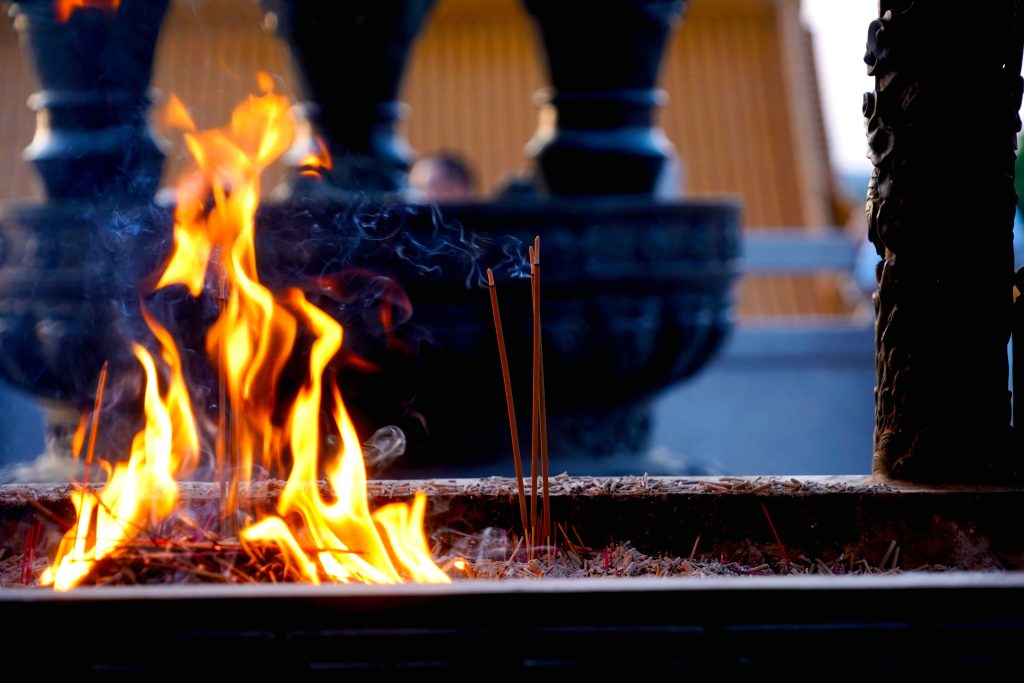
Maintaining the altar is an ongoing act of care rather than a formal obligation. Lighting incense and offering tea or water each morning is a simple daily practice that many families observe. On the 1st and 15th of each lunar month, fuller offerings of food and joss paper are appropriate. On death anniversaries, during Qingming, and through the Hungry Ghost Festival, more elaborate ceremonies are observed. The altar should be kept clean at all times: its condition reflects the sincerity of the family's remembrance, and a neglected altar is considered inauspicious.
For families in smaller Singapore homes where space is genuinely limited, or where no one is regularly available to maintain the altar, placing the tablet at a Buddhist temple or columbarium is a practical and equally respectful alternative. Many temples offer ongoing chanting and prayer services on behalf of the tablets they house, so the care continues even when the family cannot be present.
Honouring Your Loved One Through Tradition
Whether a family sets up an ancestor tablet at home, places one at a temple, or chooses not to at all, what matters most is the intention behind it. Honouring the memory of the departed with sincerity, in whatever form that takes, is the point.
If you are navigating these decisions after a loss and are unsure where to begin, Singapore Funeral Enterprise is here to help. Our Singapore funeral services cover every stage of the mourning process, from the funeral itself through to ancestral rites and post-funeral traditions, delivered by an in-house team of 18 trained professionals with decades of frontline experience serving Buddhist and Taoist families. For families observing Taoist customs specifically, our Taoist funeral packages are transparently and affordably priced, with all costs itemised clearly upfront.
We offer a free, no-obligation 45-minute face-to-face consultation. We are available by phone and WhatsApp at 8068 9898, 24 hours a day, 7 days a week. You can also leave your details via the contact form on our website, and we will arrange a callback at a time that suits you.