What Are the Traditions of a Chinese Funeral?
Chinese funeral traditions, including Cantonese funeral traditions, are built on three interconnected values: deep respect for the deceased, protection of the surviving family from inauspicious influences, and the belief that the living can actively support the departed soul's journey through ritual.
In practice, Asian funeral traditions across Chinese communities in Singapore share a common shape. A multi-day wake is held, centred around an altar with offerings and presided over by monks or priests who lead prayers and chanting. Joss paper and symbolic items are burned throughout the wake. A procession accompanies the casket to its final destination, and post-funeral observances extend the mourning period well beyond the day of cremation or burial.
Cantonese funeral rituals reflect both this broader Chinese tradition and the specific character of Cantonese culture, a community that places particular weight on ritual correctness, filial duty, and the belief that how a person is sent off shapes what awaits them.
In Singapore, these funeral rituals have also adapted over time, with cremation now the most widely practised option among Cantonese families owing to land constraints and the influence of Buddhist and Taoist beliefs around the soul's release from the physical body.
Wake: Shou Ling (守靈) and the Altar
What do Chinese people do when a family member dies? The first and most immediate answer is this: they gather, and they stay.
The concept of shou ling (守靈), meaning "guarding the spirit," lies at the heart of the Cantonese wake. Family members hold vigil for anywhere between three and seven days, accompanying the soul of the deceased through the uncertain transitional period between death and its final journey. The purpose is both spiritual and deeply human: no one should have to find their way alone.
The altar set up during this period typically includes:
- A Framed Photograph: A photograph of the deceased anchors the soul's identity at the altar and serves as the focal point for offerings and prayers throughout the wake.
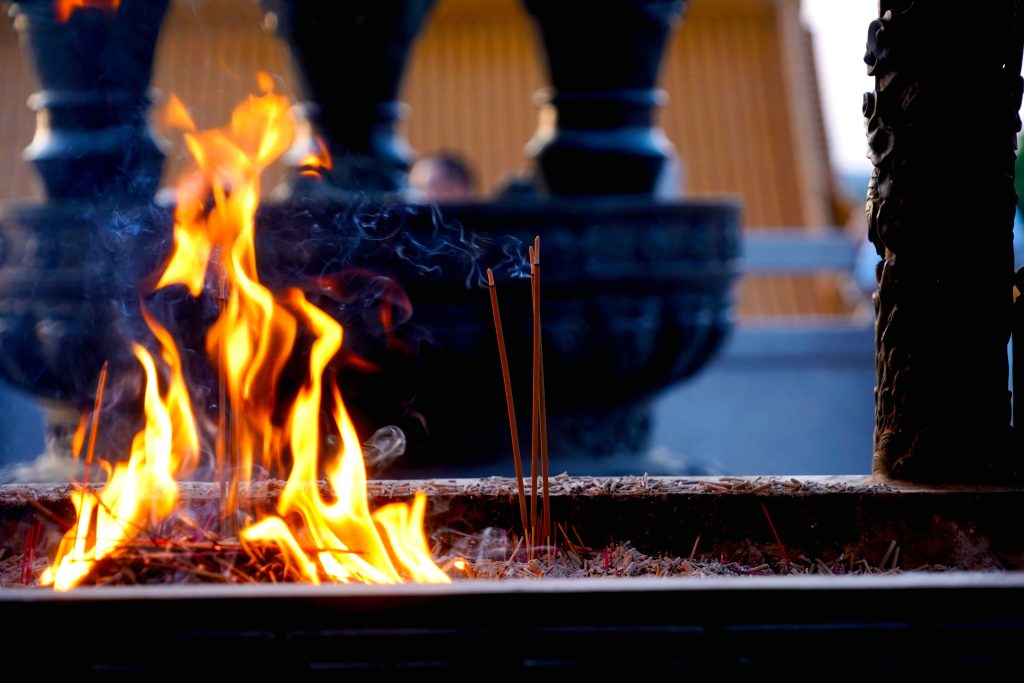
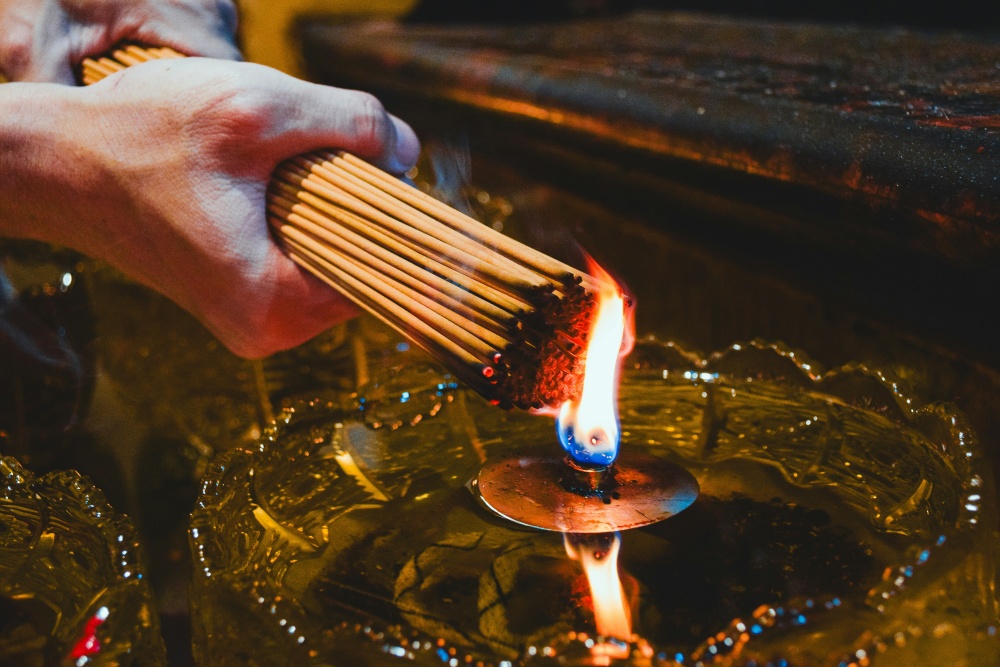
- Incense and Candles: These items are placed at the altar, with the smoke believed to create a pathway between the living and the spirit world.
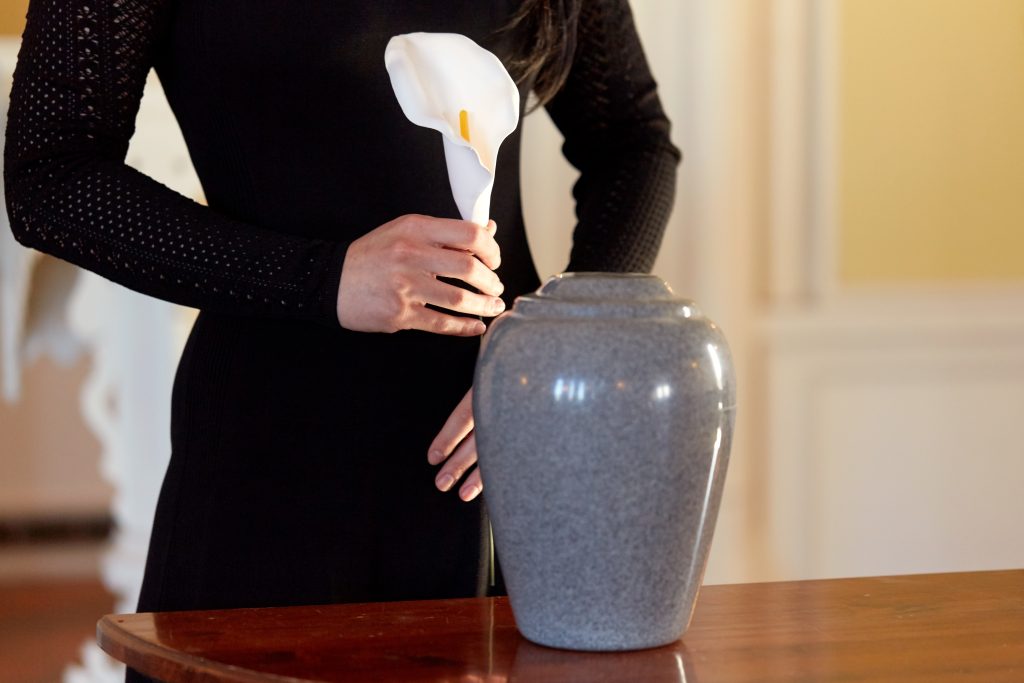
- Flowers: White chrysanthemums or other white flowers are arranged as an expression of mourning and purity.
- Food Offerings: Fresh fruit and the deceased's favourite foods are offered as continued nourishment for the soul, replenished daily throughout the wake.
Some families also cover mirrors in the home during the mourning period, a traditional practice intended to prevent the spirit from being drawn into or startled by its own reflection.
What to Wear to a Cantonese Funeral
What colour should you wear to a Chinese funeral? It's one of the most commonly asked questions from guests unfamiliar with Cantonese funeral customs, and the answer depends on who you are to the family.
For Immediate Family
- White Garments: Close relatives traditionally wear plain white garments or heavier traditional mourning fabric as a sign of grief and filial devotion.
- Colour by Relationship: In many Cantonese families, the colour of mourning attire signals the wearer's relationship to the deceased, white for immediate family, blue or green for more distant relatives, and black for acquaintances and guests.
For Guests
- Dark and Modest Clothing: Black is universally safe. Avoid bright colours, festive patterns, and red in any form.
The Exception
- Hǐsōu (喜喪): In Cantonese tradition, when an elderly person passes away peacefully at a very advanced age, typically 80 or older, the death is considered a hǐsōu, or "joyful departure," a life lived fully and completely.
- Pink or Red Attire: In these cases, the family may invite guests to wear pink or even red as a celebration of a long and fulfilled life. This is a meaningful cultural nuance, and one that guests should only act on if explicitly invited by the family.
Offerings and the Burning of Joss Paper
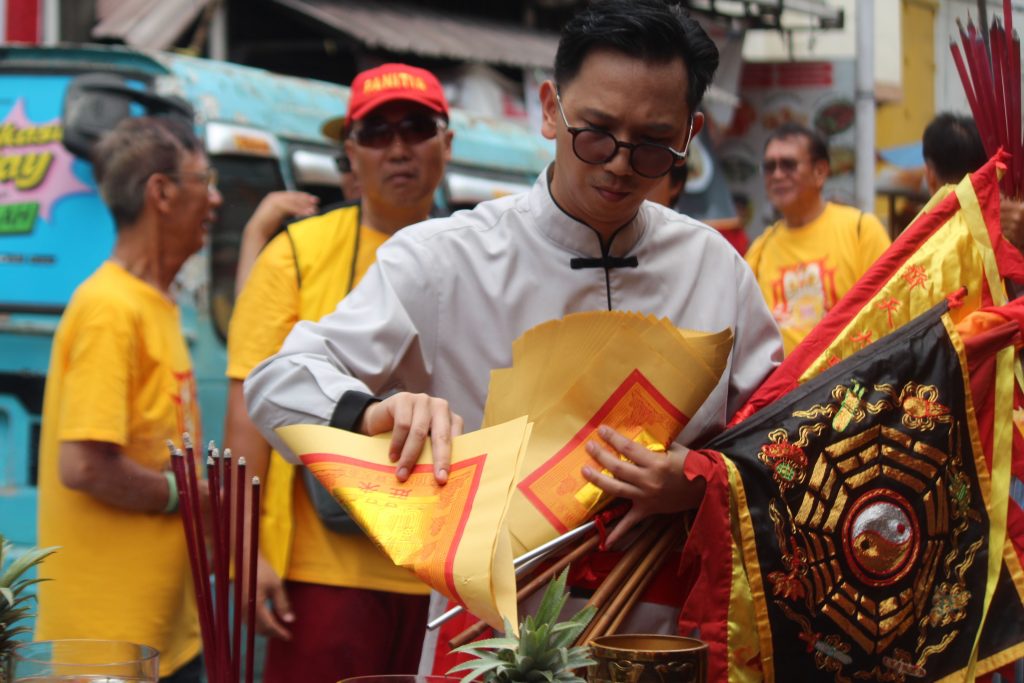
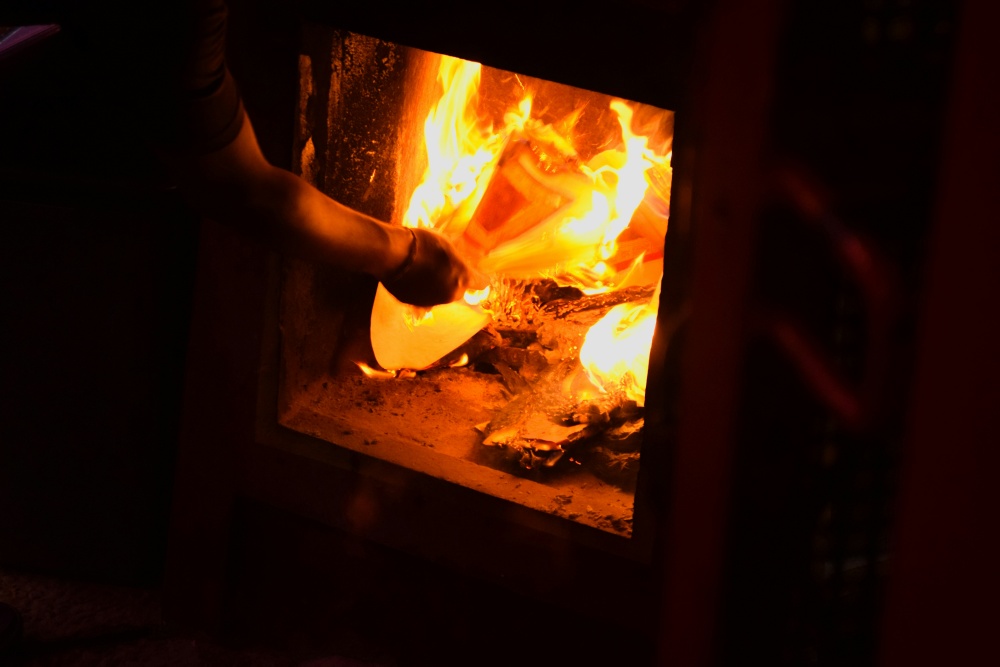
Central to Cantonese funeral rituals is the belief that material needs continue in the spiritual realm, and that the living carry a responsibility to ensure their loved one does not go without. Joss paper and symbolic paper offerings are burned so that the deceased arrives in the afterlife well-provided for.
Items families typically burn include:
- Joss Paper: Also known as hell money or spirit money, joss paper represents financial resources for the afterlife.
- Paper Replicas: Everyday items such as clothing, shoes, and household goods are recreated in paper form and burned as offerings.
- Modern Comforts: Increasingly, families burn paper versions of contemporary items, including cars, electronic devices, and luxury goods, adapted to reflect the life and preferences of the person who has passed.
The burning is typically conducted at designated times during the wake and is led or supervised by the officiating monk, Taoist priest, or a senior family member. Fruit and food offerings are also maintained on the altar throughout and replenished daily as a continued act of care.
Bai Jin: Giving Condolence Money at a Cantonese Wake
The custom of bai jin (白金), literally meaning "white gold," involves guests presenting condolence money to the bereaved family inside a plain white envelope. It's a gesture of support, and in practical terms, it helps the family offset the costs of the funeral.
In Cantonese tradition, the amount given is typically an odd number. Even numbers are associated with auspicious, celebratory occasions; odd numbers are reserved for mourning. The appropriate sum will vary depending on the guest's closeness to the family, but the gesture itself matters far more than the figure.
Guests should present the envelope quietly at the registration table upon arrival and sign the condolence book. This is standard practice at most Cantonese wakes in Singapore.
Leaving the Wake: Protection Packets, the Red Thread, and Cleansing Rituals
Several Cantonese funeral customs are clustered around the moment of leaving the wake, practices that are often unfamiliar to first-time guests but carry a clear and considered purpose.
The Protection Packet
When leaving a Cantonese wake, guests are typically offered a small red or white packet containing a coin, a piece of candy, and sometimes a handkerchief.
The coin is intended to be spent immediately upon leaving, symbolising the return of good fortune. The candy should be eaten before arriving home. Neither should be brought indoors unopened, as doing so is considered inauspicious.
The Red Thread
Guests may also receive a red thread upon leaving, a custom seen across many Chinese funeral traditions in Singapore. In some Cantonese families, it's traditional to tie the thread to the doorknob as a protective gesture before discarding it, warding off any lingering inauspicious energy from the wake.
Cleansing Upon Returning Home
A common practice after attending a Cantonese funeral is to wash the hands and face with water steeped in flower petals or pomelo leaves before entering the home. Many families in Singapore keep a pail of this water at the entrance for guests attending the wake. This ritual is believed to cleanse the body of inauspicious energy absorbed during the wake and to mark a clear boundary between the space of mourning and the living space of the home.
The Funeral Procession and the Final Farewell
At the end of the wake, the family accompanies the casket from the wake venue to the crematorium in a final act of filial escort for the departed. The procession is not merely logistical. It's a public declaration of love, duty, and grief.
In Cantonese tradition, the procession is typically led by the eldest son or grandson, who carries the deceased's framed photograph and an incense urn. It's a role that carries both symbolic weight and deep cultural significance. Other family members follow in order of their relationship to the deceased.
In Singapore, cremation is the most widely practised choice for Cantonese families. A final Taoist funeral ceremony or Buddhist rite is held at the crematorium before the cremation takes place, encompassing chanting and any remaining ritual observances. After cremation, families typically collect the ashes and arrange for columbarium placement, inland ash scattering, or sea burial according to their wishes.
Honouring Your Loved One With Knowledge and Care
Understanding the meaning behind each ritual transforms the experience of a Cantonese funeral. What might appear to a first-time guest as a sequence of unfamiliar customs becomes, with context, a profound and coherent act of love across generations.
Singapore Funeral Enterprise has guided families through Cantonese funeral customs for over ten years. Our in-house team of 18 trained professionals understands the specific customs, dialect group variations, and ritual requirements of each community we serve. From Taoist funerals to Buddhist funerals, all our customised funeral packages are priced transparently, fixed in writing before you commit, and include a complimentary 45-minute face-to-face consultation with no obligation to proceed.
If you'd like to speak with someone or simply have a question, we're available by phone and WhatsApp at 8968 9898, 24 hours a day. You can also leave your contact details via the form on our website, and we'll arrange a callback at a time that suits you.