Hokkien is the largest Chinese dialect group in Singapore, and Hokkien funeral traditions here are rooted in Taoism, though some families include Buddhist elements in their arrangements. Hokkien practices share ground with Cantonese and Teochew customs, particularly around ancestor worship, but they carry their own rites, timing, and language of chanting, distinct enough to feel unfamiliar to families from another dialect group.
This guide sets out the beliefs shaping Hokkien funeral rites, what happens during the wake and how long it typically runs, the key ceremonies from altar to procession, and the observances that continue for weeks after the funeral itself.
Hokkien Beliefs About Death and the Soul's Journey
In Hokkien tradition, death is not a single moment but the start of a passage. The soul does not depart immediately. It lingers near the family, is guided through several stages, and settles into rebirth or ancestral rest only after the proper rites have been performed. A Taoist funeral ceremony supports that passage, not simply to mark that someone has died.
This is why filial duty carries so much weight in Hokkien funeral rites. The family's role is active rather than passive: children and grandchildren lead offerings, keep watch over the altar, and carry out rituals believed to directly help the departed move forward. Understanding this framing changes how the wake reads. The length of it, and the detail within it, is not tradition performed for its own sake. It is the family doing something for the person they have lost.
The Hokkien Wake: Duration, Setup, and Key Rites
Hokkien wakes traditionally run for five or seven days, longer than most other Chinese dialect groups in Singapore. The odd number is deliberate: it signals that the soul is still mid-journey, not settled.
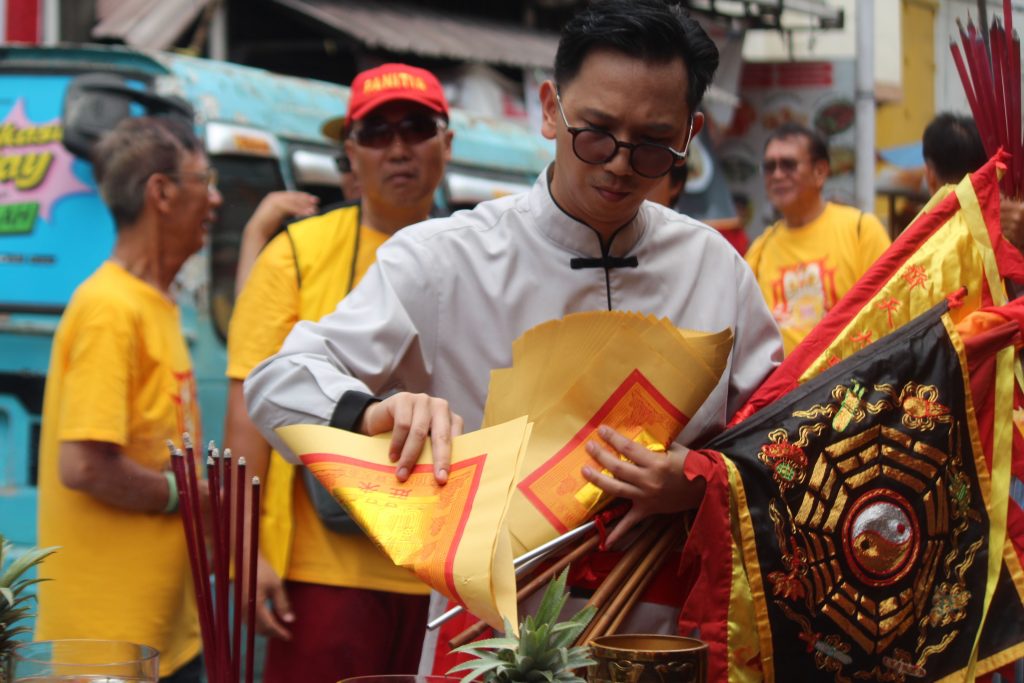
Hokkien funeral customs and practices begin with the altar. A framed photograph of the deceased sits alongside incense, candles, white flowers, food offerings, and a set of traditional Hokkien ceremonial items. Taoist priests chant in Hokkien dialect throughout the wake, and this detail matters: not every officiant is fluent in Hokkien chanting, so families should confirm this early rather than assume it.
The eldest son typically leads the offerings and, along with other close family members, keeps vigil at the altar and receives guests throughout the wake. Burning joss paper and paper replicas of household items, from furniture to daily necessities, is a strongly observed part of Hokkien funeral customs, intended to provide for the deceased in the next life.
In Chinese culture more broadly, how many days pass between a death and when the family can bury or cremate their loved one depends on dialect group and family circumstance, but for Hokkien families this is shaped by the five- or seven-day wake that comes before the funeral itself. Coordinating priests, dialect-appropriate chanting, an altar of this kind, and a wake that runs this long is a significant undertaking, which is why most families work with a funeral service provider who already knows Hokkien customs.

The Funeral Procession and Cremation or Burial
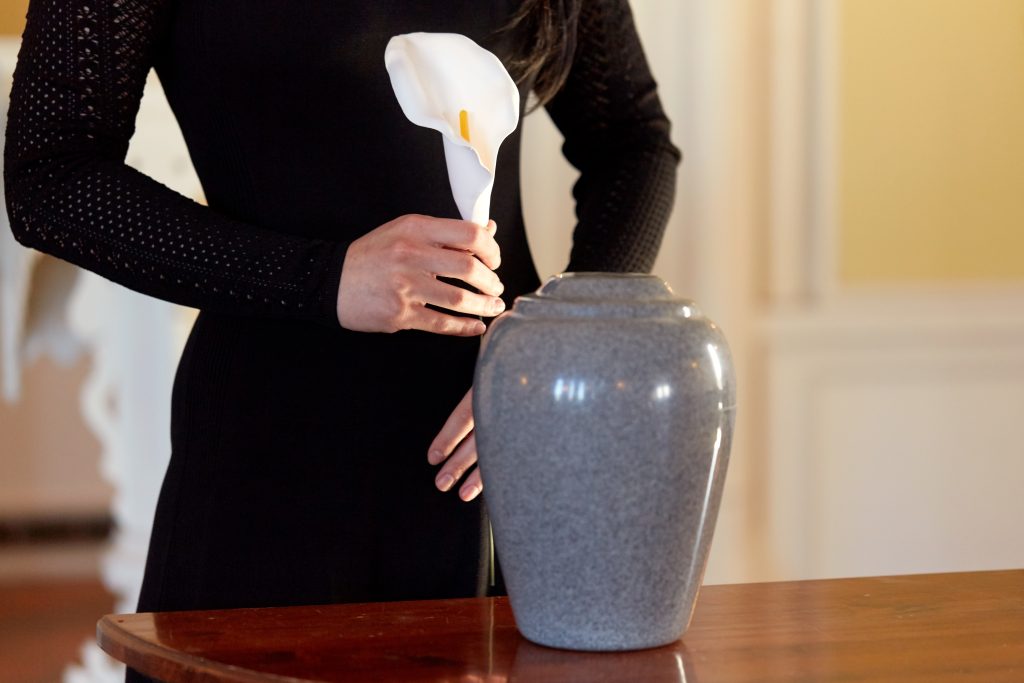
When the wake ends, the funeral procession moves from the wake venue to the crematorium, led by the eldest son carrying a photograph of the deceased. Other family members and mourners follow behind, accompanying their loved one on this final stage of the journey.
Cremation is the predominant choice for Hokkien families in Singapore, reflecting both land constraints and the Taoist view that the physical body can be released once its purpose is served. Burial remains available for families who prefer it, though it is less common given space limitations here.
For families who prefer a simpler, more private send-off, Straight Case arrangements, cremation without a formal wake, are also available. Hokkien families choosing this option can still request brief Taoist prayers at the crematorium, so the send-off keeps its spiritual dimension even without the extended wake.
After cremation, ashes are typically placed in a columbarium, though some families choose inland ash scattering or sea burial instead.
Post-Funeral Observances: The 49th and 100th Day
The funeral itself is not the end of the observances for Hokkien families. The 49-day mourning period reflects the belief that the soul remains in an intermediate state during this time, still on its way to its final rest.
Prayers are typically offered on every seventh day within this period, with the 49th day carrying particular weight. It is often marked by a more elaborate ceremony intended to formally release the soul from its intermediate state. Many Hokkien families also observe the 100th day as a further close to the mourning period, a milestone rather than a formal requirement, but one that is widely kept.
Remembrance continues well beyond these milestones, through home altars kept for the deceased and through the wider Chinese calendar. Qingming and the Hungry Ghost Festival both give Hokkien families an occasion to pay respects each year.
Arranging a Hokkien Funeral With Familiarity and Care
A Hokkien funeral, carried out with the right knowledge of dialect, ritual sequence, and family duty, is a coherent act of love across generations rather than a checklist to get through. Getting the details right, from who chants in Hokkien to when the 49th day falls, lets a family focus on each other instead of the logistics.
Singapore Funeral Enterprise offers Hokkien and Buddhist funeral services grounded in genuine familiarity with the dialect and its customs, with experience in Cantonese and Teochew traditions for families who need it. Our in-house team of 18 trained professionals understands the specific rites, timing, and dialect requirements involved, rather than treating Hokkien customs as an afterthought.
Pricing also stays transparent and affordable throughout, with no surprises once arrangements are underway. To talk through a Hokkien funeral, or any other service, contact us for a free, no-obligation 45-minute face-to-face consultation. We are available by phone and WhatsApp at 8968 9898, 24 hours a day, seven days a week. Alternatively, you can leave your contact details in our contact form, and we will arrange a callback at a time that works for you.