Why Do Buddhists Chant at Funerals?
For those attending a Buddhist funeral for the first time, the chanting can feel unfamiliar. But once you understand what it's for, it becomes one of the most moving parts of the whole farewell. Why do Buddhists chant at funerals? There are three core reasons, each serving a distinct purpose for both the departed and those left behind.
To Guide the Soul of the Departed
Buddhism teaches that at the moment of death, consciousness doesn't simply switch off. In traditions influenced by the Tibetan concept of the bardo, the soul may remain in an intermediate state for up to 49 days before rebirth. During this transitional period, the consciousness of the deceased can feel disoriented, even fearful.
Buddhist funeral prayers are directed toward the deceased during this time, not the living. Chanting is believed to bring clarity and peace to the departing consciousness, helping it remain calm and oriented rather than lost. In this sense, every chant is an act of spiritual care for someone still very much on a journey.
To Accumulate and Transfer Merit
Central to Buddhist practice is the understanding that virtuous actions generate positive karma, known as merit, which can be dedicated to others. When monks chant with sincere intention alongside offerings made by the family, the merit generated is formally transferred to the deceased.
This isn't understood as symbolic. It's considered a real and meaningful act of support, one that helps the departed move toward a more favourable rebirth. Chanting, in this context, is an act of love that reaches beyond death.
To Bring Peace to the Living
Grief is disorienting in ways that are difficult to describe. The rhythmic, meditative quality of chanting creates a calm and sacred atmosphere that gently shifts a mourner's focus from the weight of their own sorrow toward the well-being of the person they've lost.
Many families describe the chanting sessions as among the most comforting parts of a Buddhist funeral, a shared spiritual act that holds the room and everyone in it together.
What Do Buddhists Say at a Funeral?
This is one of the most commonly asked questions from those attending a Buddhist funeral for the first time, and the honest answer is that it depends on the tradition the family follows.
In Singapore, most Buddhist families observe Chinese Mahayana traditions, though Theravada practices are present among Thai and Sri Lankan communities. What do Buddhists say at a funeral? That varies accordingly.
For Mahayana families, the most commonly heard phrase is "Namo Amituofo," a continuous recitation of the name of Amitabha Buddha. What is the mantra for Buddhist funerals in the Theravada tradition? Pali chants such as "Anicca vata sankhara" are more commonly heard. Monks may also recite the Heart Sutra, the Karaniya Metta Sutta, and other sutras depending on the tradition. Family members typically follow along or sit quietly in meditation.
Key Buddhist Funeral Chants and What They Mean
This Buddhist chanting guide covers the main chants a family or attendee is likely to encounter during a Buddhist wake or funeral in Singapore.
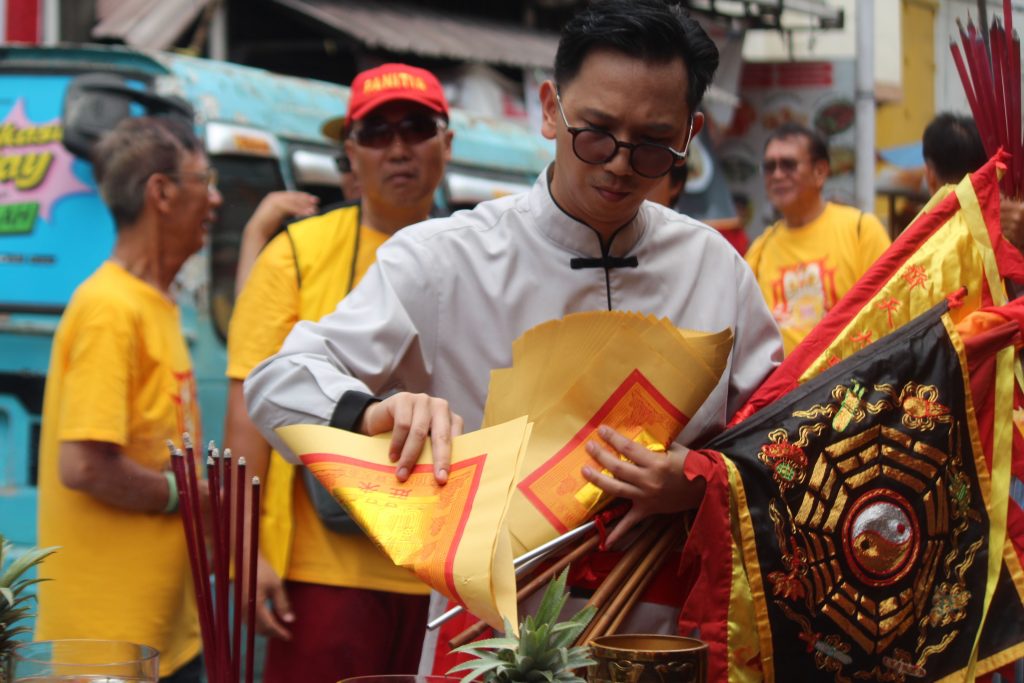
Namo Amituofo (Amitabha Mantra): Pure Land Buddhism
The most widely heard Buddhist funeral chant at Chinese Buddhist funerals in Singapore, "Namo Amituofo," is a continuous recitation of Amitabha Buddha's name. Its purpose is to invoke Amitabha's compassion and guide the soul toward the Western Pure Land, a realm free from suffering and considered an ideal environment for continuing the path toward enlightenment.
The repetition is intentional. Many voices chanting together are believed to amplify the spiritual energy directed toward the deceased, creating a collective act of guidance and care.
Heart Sutra (Prajñāpāramitā Hṛdaya Sūtra): Mahayana Buddhism
One of the most revered texts in Mahayana Buddhism, the Heart Sutra conveys the teaching of emptiness and impermanence. At a funeral, it helps the deceased release attachment to the physical body and the material world, while supporting mourners in accepting their loss with greater clarity. Its recitation is also believed to purify negative karma for both the departed and those present.
Anicca Vata Sankhara: Theravada Buddhism
A Pali chant meaning "Impermanent truly are conditioned things," this chant is drawn from the Theravada tradition practised by Thai and Sri Lankan communities in Singapore. It grounds the chanting session in one of Buddhism's most fundamental teachings: that all conditioned things arise and pass away, and that death is not an aberration but a natural part of existence.
Karaniya Metta Sutta: Loving-Kindness Chant
A chant dedicated to loving-kindness, the Metta Sutta is often offered to bless the deceased and bring comfort to the surviving family. It's a wish for the well-being of all beings, and its recitation at a funeral extends that wish directly to the departing soul.
Mantra for Rebirth in the Pure Land (Dharani of Amitabha Buddha)
A sacred chant dedicated specifically to aiding the deceased in attaining a favourable rebirth in the Pure Land. It's believed to cleanse karmic obstacles and strengthen the connection between the deceased and Amitabha Buddha's compassionate vows.
What Happens During a Buddhist Funeral Chanting Session
For families and guests unfamiliar with the structure, here's a straightforward walkthrough of what to expect during Buddhist monk funeral chanting.
The Monks' Role
Typically, four or more monks preside over the evening chanting session during the wake. The session is led by the head monk and conducted in sets, each lasting around 30 minutes. Traditional instruments, including a wooden fish drum, bells, and cymbals, mark the rhythm and signal transitions between chants. Monks may also offer a brief teaching on impermanence or the nature of death, bringing comfort and perspective to the family gathered around them.
Niànfó: Guiding the Consciousness
During the chanting session, a practice known as niànfó (念佛) is performed, the continuous and mindful recitation of the Buddha's name, directed specifically at helping the consciousness of the deceased remain calm and oriented. Family members are encouraged to join in. The collective intention of everyone in the room is considered spiritually significant.
Transfer of Merit
At the end of the session, the family presents offerings to the monks, traditionally food or robes, as an act of generosity. This offering generates merit, which is then formally dedicated to the deceased through the recitation of the Transfer of Merit Verse. It's a quiet, powerful affirmation of the Buddhist belief that selfless giving can reach across the boundary of death.
Chanting With Care and Knowledge
Chanting is one of the most profound expressions of care a community can offer a departing soul. It's an act of love, intention, and spiritual generosity, offered at the moment it's needed most.
The specific chants, timing, and format will vary depending on the dialect group and Buddhist tradition of the family. An experienced team will know what's needed and ensure everything unfolds as it should.
Singapore Funeral Enterprise has guided Singapore families through Buddhist funeral services for over ten years. Our in-house team of 18 specialists understands the specific rites, chanting traditions, and customs across Chinese Mahayana and Theravada Buddhist communities, and every arrangement is handled with care from the first call through to the final farewell.
Every Buddhist funeral package is priced transparently, fixed in writing before you commit, and includes a complimentary 45-minute face-to-face consultation with no obligation to proceed.
If you'd like to speak with someone or simply have a question, we're available by phone and WhatsApp at 8968 9898, 24 hours a day. There's no rush, and no pressure. We're here whenever you're ready. You can also leave your contact details via the form on our website, and we will arrange a callback at a time that suits you.